Read your signals before they are incidents.
A psychosocial risk practice for the H&S, HR and people leaders accountable for getting it right. Aligned with ISO 45003 and the HSW Act.
The signals are always there.
All of them.
For months.
The wellbeing platform is running. The engagement survey is going out. The policy is on paper. ISO 45003 is sitting on your desk.
And nobody has the language - or the psychological safety - to make the signals stop.
Most leaders carry this quietly. The numbers look fine, until they don’t. The first real signal arrives as an incident, a grievance, a resignation, a fine.
Between the ordinary morning and the avoidable outcome, there is a window.
We help leaders see it earlier.
Three ways in, depending on where you’re starting.
The Psychosocial Risk Leadership Programme
An eight-week programme for one H&S leader from your organisation. The fastest, lowest-risk way to test whether this work belongs in your business.
The Neuro-Inclusive Performance System
A 6 or 12-month organisational programme. Assessment → Activation → Implementation → Sustain. For organisations ready to run the work properly, with leadership behind it.
The Brain Gym
The ongoing behavioural layer. Short, practical learning your people use in the run of work. Built to scale - from a team of ten to an organisation of a hundreds.
Workshops don’t change how people work
Real change happens in meetings.
In communication.
In workload design.
In how managers respond when a teammate goes quiet.
We don’t deliver workshops.
We help your organisation build the language, then the psychological safety, then the system that holds both.
Language first. Psychological safety follows.
That’s the pattern.
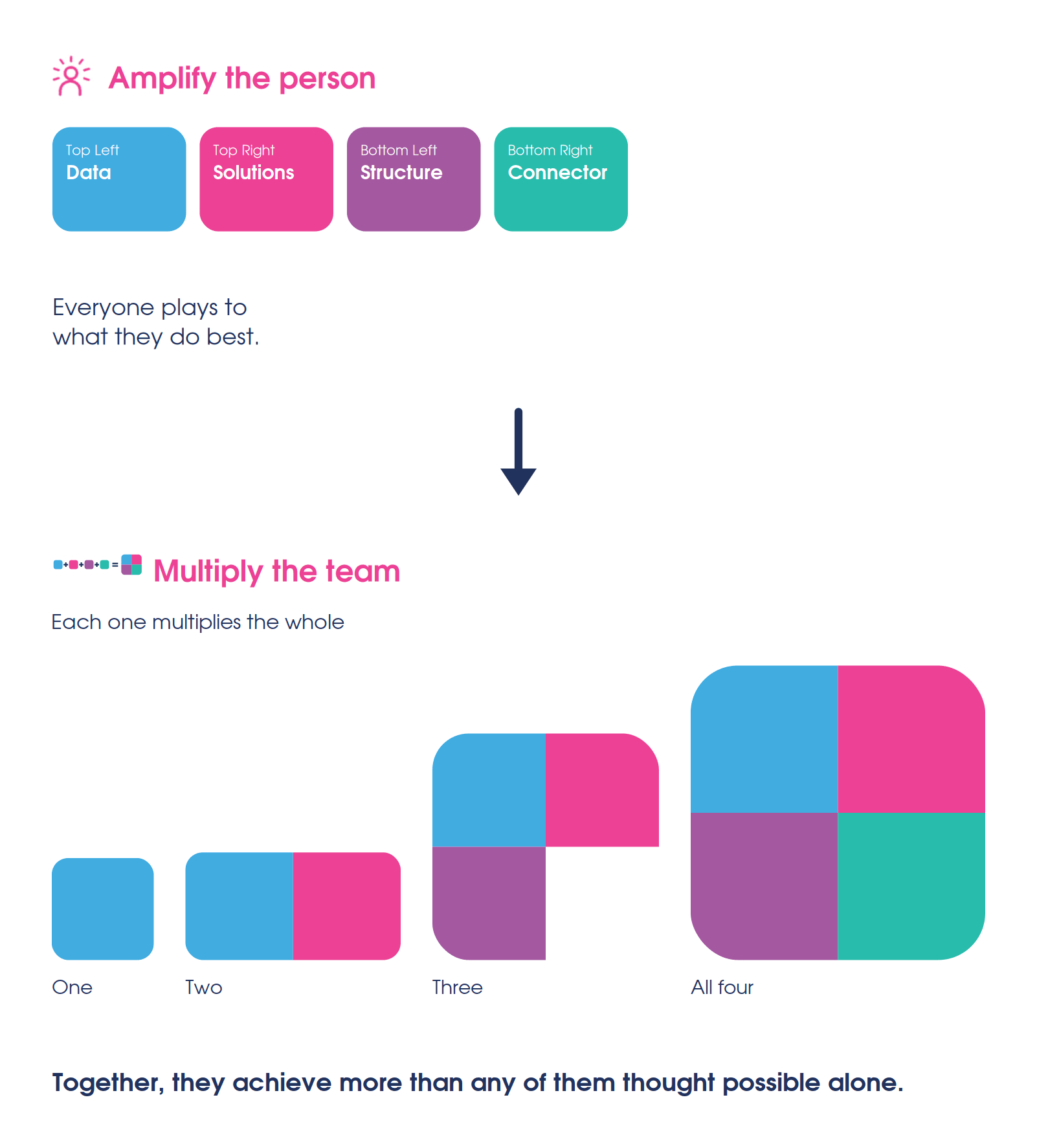
We work from four shared models.
The iceberg.
Little n / Big N.
The nQuadrant.
Emotional brain states.
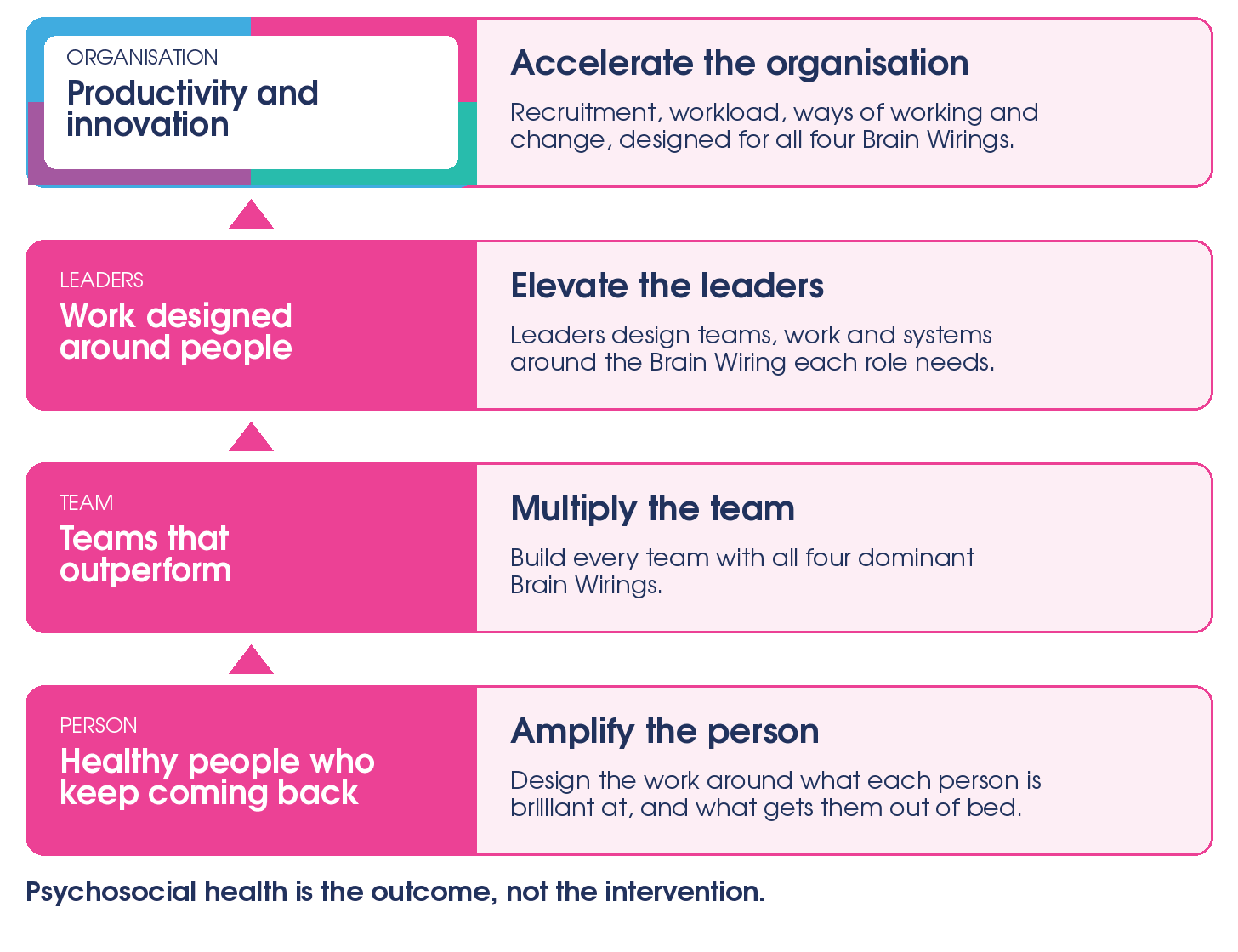
They’re the language we implement in your organisation, so the signals stop being invisible and the conversations get easier. Built from neuroscience. Pressure-tested in NZ workplaces. Plain enough that anyone in your organisation can use them.
This is your workforce - today.
Pike’s signals didn’t disappear. They moved in with us.
Workplaces weren’t built with brain diversity in mind.
We’re paying the price.
What this looks like when it’s working.
Clutha District Council was paying for ordinary signals nobody could read.
Eight years. Nearly half a million in fines.
“Our processes weren’t working and our people weren’t working well together.”
Christina Johnston, H&S and Org Performance Improvement Manager, CDC
We helped Clutha District Council build the language for what was happening underneath.
The H&S risk register, the policy frame, the return-to-work-by-quadrant model - all field-tested before they went anywhere else.
The “three teams · sixty seconds” moment.
At CDC, we ran a card-sort exercise. Three teams. No conferring. Sixty seconds each. We asked the first group their top hazard. The rest of the room said: “That was ours too.”
Different people. Different jobs. Identical top hazards. When different people in different teams identify the same signals - the signals aren’t them. It’s what the system is producing.
For the first time, they had the language - and the psychological safety - to make them stop.
Thirty months in. The signal had shifted.
45% staff
engagement
Up from 33% - still room to grow
100% programme
and cards rated useful
Every HSR who used them said yes
100% resource
consent statutory targets met
Stabilising people systems supports performance
“When people have the language, they can understand each other faster, creating safety to act before the issue becomes a crisis.”
Christina Johnston, CDC
Start with the Psychosocial Risk Leadership Programme.
One H&S leader, eight weeks, the language and the approaches to take back to your organisation.
Sign up to our newsletter to stay in the loop with all things neurodiversity
DivergenThinking featured on
the breakfast show
Celebrating Neurodiversity Week
Our clients and what they have to say about working with us.
"Well managed and well supported neurodiverse teams have the potential to outperform neurotypical workforces."
Australian Institute of Directors.
"Research highlights how ADHD brains are more likely to be innovative thinkers and entrepreneurial when working in their passion areas."
Hatak et al (2021) Small Bus Econ 57:1693–1713.
"ASD lean in half the time and are 40 to 138% more productive than neurotypical colleagues."
JPMorgan Chase
“This is life-changing — something that can change how workplaces work.”
Christina Johnston, CDC